
Choosing between the Isuzu NRR and the Ford F600 depends on whether your fleet prioritizes urban agility or raw job site power. The Isuzu NRR is a Low Cab Forward (LCF) truck built for tight city streets and maximum visibility, while the Ford F600 is a conventional chassis designed for heavier payloads and off-pavement performance. For Denver businesses, the right choice is determined by your specific routes and the terrain your drivers face daily.
The Ford F600 is engineered with a 22,000 lb GVWR and upgraded driveline components, offering nearly 7,000 lbs more max payload capacity than standard Class 4 trucks.
Why Visibility and Maneuverability Matter for the Isuzu NRR
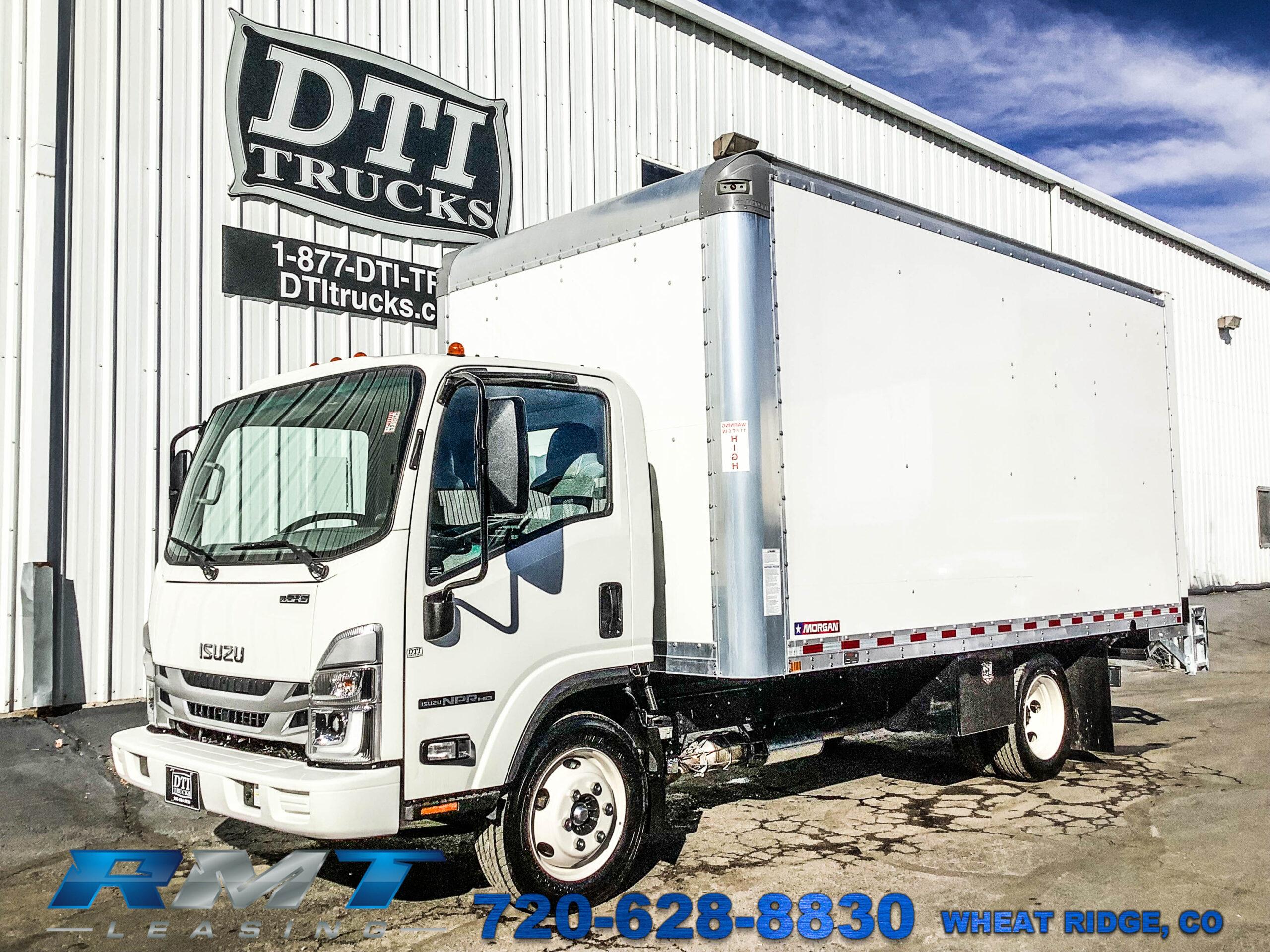
When your routes involve navigating tight Denver alleys, downtown loading docks, or crowded residential neighborhoods, the Isuzu NRR is built to solve those specific spatial challenges. Because it is a Low Cab Forward (LCF) design, the driver sits directly over the front axle. This eliminates the long hood found on conventional trucks, providing a line of sight that allows the driver to see the ground just feet in front of the bumper.
Maneuverability is the other major advantage here. The NRR features a 49.5-degree wheel cut, giving it a curb-to-curb turning radius as tight as 16.4 feet on shorter wheelbases. This agility is critical for urban delivery and service fleets that need to make U-turns or back into cramped spaces without multiple-point turns. In an environment where every minute spent maneuvering is a minute lost on the schedule, the NRR’s compact footprint and superior visibility reduce driver fatigue and the risk of low-speed property damage.
Analyzing the Ford F600 for Heavy Vocational Demands
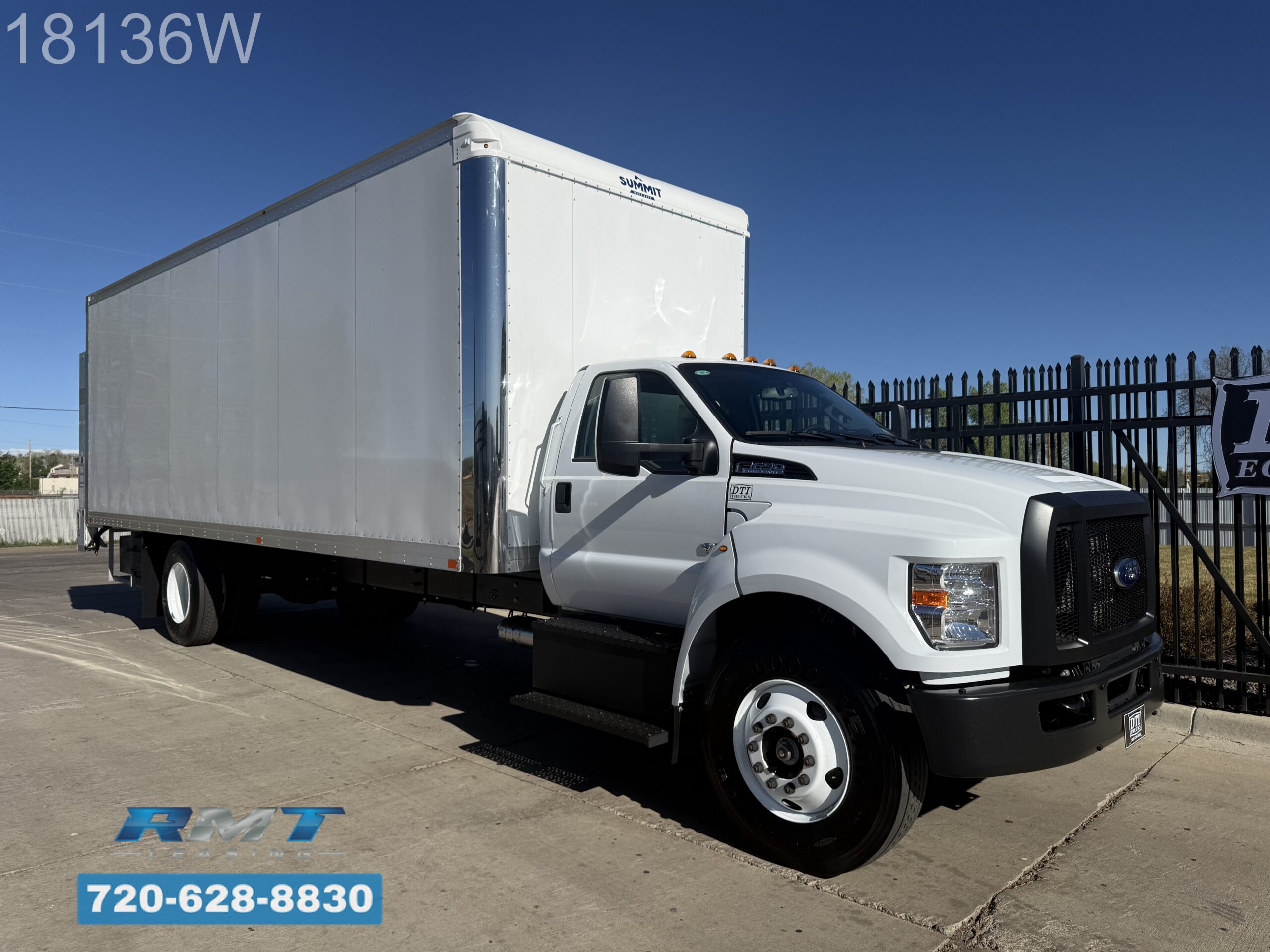
The Ford F600 occupies a unique space in the medium-duty market, offering the size of a Class 5 truck with the upgraded chassis and driveline components of a Class 6 vehicle. Unlike the cab-over design, the F600 uses a conventional “hood-forward” layout. This design is built for businesses that require higher towing capacities and the ability to operate on unimproved surfaces where a standard LCF might struggle.
The most significant advantage the F600 holds for Colorado contractors is the availability of a factory 4×4 work truck configuration. While the Isuzu NRR is restricted to paved surfaces, the F600 can be spec’d to handle mud, snow, and steep job site grades. Combined with the 6.7L Power Stroke® Diesel engine, the F600 provides the high-end torque and traction necessary for hauling heavy equipment trailers or supporting utility bodies in demanding environments. This makes it a more versatile option for fleets that split their time between the highway and the dirt.
Key Differences Between the Isuzu NRR and Ford F600
While both trucks fall within the medium-duty category, their engineering philosophies are completely different. Deciding which one fits your fleet requires looking at the specific mechanical advantages each chassis offers for your daily operations.
1. Turning Radius and Maneuverability
The Isuzu NRR wins on agility. Its 49.5-degree wheel cut allows for a turning radius of roughly 16 to 18 feet (depending on wheelbase), which is significantly tighter than the Ford F600. The F600, being a conventional truck with a hood and a wider front axle stance, requires much more room to clear a corner. If your drivers spend their day in old Denver neighborhoods or downtown alleys, the NRR will save them significant time and frustration.
2. Payload and GVWR
If you need to maximize every pound of equipment you carry, the Ford F600 has the edge in raw capacity. The F600 is rated at a 22,000 lb GVWR, effectively bridging the gap between heavy-duty pickups and true Class 6 trucks. The Isuzu NRR sits at 19,500 lb GVWR. While the NRR is highly efficient for its size, the F600 is designed with heavier-duty brakes, axles, and frame rails to support higher payloads and more aggressive towing requirements.
3. Cab Comfort and Driver Experience
The driver’s experience differs based on how often they get in and out of the cab. The Isuzu NRR features a low step-in height and doors that open 90 degrees, making it ideal for high-frequency stop-and-drop routes. However, the Ford F600 offers the familiar interior of the Super Duty line. For longer hauls between Denver and the mountain corridors, many drivers prefer the conventional seating position and additional “crumple zone” provided by the F600’s hood.
Customization and Upfitting for Your Denver Fleet
Both the Isuzu NRR and the Ford F600 serve as versatile foundations for a wide range of vocational bodies. The flat, straight frame rails on both chassis make them ideal for mounting everything from service bodies to stake beds. Because of the distinct differences in their footprints, the choice often comes down to the specific dimensions of your equipment.
For mobile service providers, box truck upfitting on an Isuzu NRR chassis is a popular choice for urban plumbing, HVAC, or delivery businesses. The LCF design allows for a longer body on a shorter wheelbase, giving you more cargo volume without increasing the overall length of the vehicle. On the other hand, the Ford F600 is often the preferred choice for specialized upfits like cranes or heavy-duty dumps, where the 4×4 work truck capability is needed to stabilize the vehicle on uneven ground.
“Had a great selection of trucks available and were very easy to work with. Great communication and everything went as expected. I had to rent a truck in a hurry, and they made it happen.”
– Tom Kirschenheuter
Final Verdict: Which Truck Wins?
The “winner” in this comparison depends entirely on your business’s geography. If your operations are centered in downtown Denver, Cherry Creek, or tight residential areas, the Isuzu NRR is the practical choice for its visibility and unmatched turning radius. However, if your fleet services construction sites, mountain projects, or requires towing heavy machinery, the Ford F600 is the more capable tool due to its higher GVWR and 4×4 options. You aren’t just choosing a brand; you’re choosing a chassis design that matches the physical reality of your job sites.
Build Your Fleet with RMT Trucks
At RMT Trucks, we don’t believe in a one-size-fits-all approach to commercial vehicles. We stock both the Isuzu NRR and the Ford F600 because we know that a landscaping crew in the foothills has different needs than a delivery business in LoDo.
Whether you are looking for a turnkey rental to get through a busy season or a long-term lease on a custom-upfitted chassis, our team is here to help you spec the right rig. Contact us today to compare these models in person and find the medium-duty solution that keeps your Denver fleet moving.